
Joint Injuries
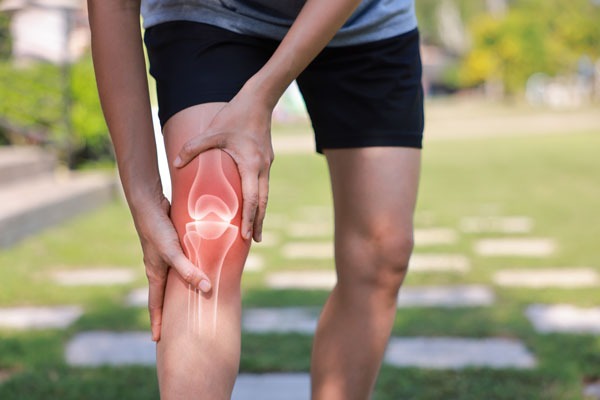
Joint injuries affect the structures that form a joint, including the articular cartilage, joint capsule, synovial membrane, intra-articular structures and periarticular tissues.
They may result from acute trauma, such as a fall, collision or twisting injury, or develop gradually because of chronic overloading, leading to cartilage changes or fluid accumulation within the joint.
They most commonly affect the knee, shoulder, ankle and hip and may cause significant loss of function both in sport and in everyday life.
Characteristic symptoms include localised or diffuse joint pain, swelling caused by fluid accumulation, stiffness, a grinding sensation or “locking” during movement, and a reduced range of motion.
In cases involving cartilage injury, pain may initially be subtle and gradually worsen over time.
Characteristics of Joint Injuries
Articular cartilage has a particularly limited capacity for self-repair. It is an avascular tissue, meaning that it has no blood vessels of its own and relies on the diffusion of nutrients from the synovial fluid. As a result, when cartilage is injured, its repair mechanisms are inherently limited and natural recovery is often slow or incomplete.
At the same time, inflammation of the synovial membrane following a joint injury, known as reactive synovitis, creates an environment rich in inflammatory cytokines within the joint. This is harmful to the cartilage and may accelerate the degenerative process when it is not treated appropriately.
Chronic joint injuries that do not heal fully are a significant risk factor for the early development of osteoarthritis.
Scientific Studies
Studies in animal models and clinical reports have documented the protective effects of hyperbaric oxygen therapy on articular cartilage. Increased oxygen diffusion into the synovial fluid under hyperbaric conditions improves chondrocyte nutrition and reduces inflammatory activity within the synovial membrane.
Research has also shown that hyperbaric oxygen therapy inhibits the activity of inflammatory cytokines, including IL-1β and TNF-α, which contribute to cartilage degradation. It also activates antioxidant enzymes that protect chondrocytes from the oxidative stress associated with inflammatory joint reactions.
Hyperbaric Oxygen Therapy for Joint Injuries
In joint injuries, hyperbaric oxygen therapy acts at two levels simultaneously: it addresses inflammation of the synovial membrane while supporting the nutrition and protection of the articular cartilage.
It is used as an adjunctive treatment alongside physiotherapy, medication or intra-articular injections, depending on the type and severity of the injury.
The increased oxygenation achieved inside the chamber reduces inflammatory cytokines within the joint, helping to protect the cartilage from further deterioration. At the same time, improved microcirculation in the periarticular tissues accelerates the resorption of accumulated fluid and reduces pain and the sensation of pressure.
In cases of cartilage injury, hyperbaric oxygen therapy activates chondrocytes and promotes the synthesis of proteoglycans and collagen, which are essential components of the cartilage matrix. Although articular cartilage cannot regenerate fully, slowing the degenerative process and improving symptoms are achievable and clinically significant objectives.
A typical treatment course consists of 20 to 30 sessions.